Paraíba tourmaline: why it is special, and what the new Ethiopian find means
Copper-coloured neon tourmaline from Brazil, Nigeria, Mozambique and now Ethiopia: how the name is defined, how labs tell origins apart, treatments, and what to check before you buy.
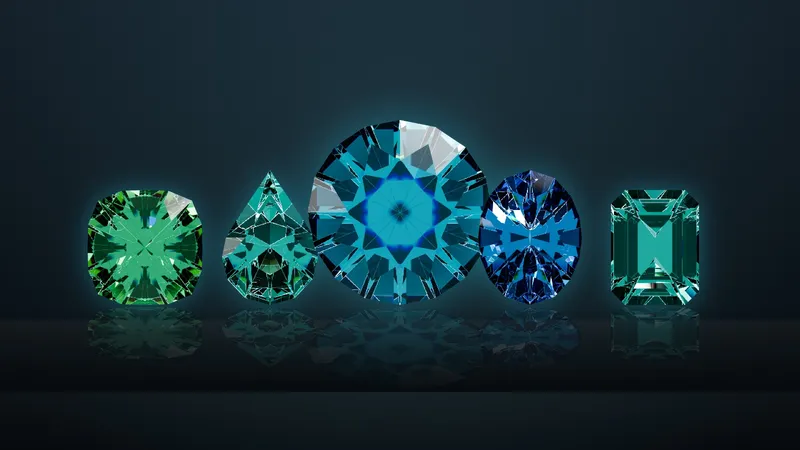
Few gems have a colour you recognise from across a room. Paraíba tourmaline does: a glowing blue to green that the trade has called "neon" or "electric" since the first stones reached the market in 1989. In 2026 it is back at the centre of the trade's attention, because a new deposit in Ethiopia has been confirmed by two of the world's leading laboratories. This guide covers what Paraíba tourmaline is, why it looks the way it does, where it comes from, what the Ethiopian find changes, and what to check before buying or selling it.
What "Paraíba tourmaline" means
Paraíba tourmaline is a variety of tourmaline, almost always the species elbaite, whose colour comes mainly from copper, with manganese. Copper is what sets it apart: no other tourmaline reaches that saturated, glowing blue to green.
The laboratories' shared definition comes from the Laboratory Manual Harmonisation Committee (LMHC), whose members include GIA, Gübelin, SSEF, GIT and other major labs. Its Information Sheet 6 (version 8, 2023) defines Paraíba tourmaline as blue (electric, neon or violet blue), bluish green to greenish blue, green or yellowish green tourmaline of medium-light to high saturation and tone, coloured mainly by copper and manganese, of whatever geographical origin. The name honours the Brazilian state where it was first mined, but it is a variety name, not a statement of origin.
The definition also says what does not qualify:
- tourmaline with only traces of copper, or low saturation, or colours outside the defined range;
- iron-rich copper-bearing tourmaline whose colour is driven more by iron than by copper (the sheet sets a spectroscopic test for this).
So "contains copper" is not the same as "Paraíba". This matters more than ever with the new Ethiopian material, as you will see below.
A short history
Brazil (1980s). The story starts with Heitor Barbosa, who began digging at an old pegmatite mine in Paraíba state, Brazil, in the early 1980s, largely on intuition and against the doubts of others. After years of shafts and galleries, his team reached the vivid blue material in the late 1980s, and the stones caused a sensation when they reached the international market in 1989. Production from the original mine was short-lived and has dropped considerably since. Barbosa died in September 2023, aged 90; his son still maintains the mine. Similar material was later found nearby in Paraíba and in the neighbouring state of Rio Grande do Norte.
Nigeria (around 2000 to 2001). Copper-bearing tourmaline was found in Nigeria. Its colours overlap with Brazil's, though saturation is generally less vivid.
Mozambique (2001 to 2005). Copper-bearing tourmaline was first recovered near Mavuco in the Alto Ligonha pegmatite district in 2001; its copper content was recognised in 2003, and it was widely sold with its origin disclosed from 2005. Mozambique has produced larger stones and is the source of pink to purple copper-bearing tourmaline.
Ethiopia (2026). The newest source, covered in detail below.
Why it is special
- The colour. Copper gives a saturated, glowing blue to green that no other tourmaline matches. Manganese adds violet and purple; heating often removes that and pushes the colour towards blue.
- Scarcity. The original Brazilian mine produced in quantity for only a few years. Most fine material is small, and inclusions are common, so large, clean stones with strong colour are rare at every source.
- Origin matters to the market. Brazilian origin has traditionally been the most sought after, and telling origins apart needs laboratory chemistry, which gives lab reports unusual weight in this trade.
- A good stone to wear. Tourmaline is 7 to 7.5 on the Mohs scale with no cleavage, which makes Paraíba practical for rings and earrings, with some care.
| Property | Typical value |
|---|---|
| Species | Elbaite tourmaline (copper-bearing) |
| Colour cause | Copper (Cu²⁺), with manganese |
| Colours | Blue, bluish green, green, yellowish green; violet to purple before heating |
| Refractive index | About 1.62 to 1.64 (doubly refractive) |
| Birefringence | About 0.02: facet doubling is often visible with a loupe |
| Specific gravity | About 3.05 |
| Mohs hardness | 7 to 7.5 |
| Usual treatments | Heating (common); occasionally clarity enhancement |
See tourmaline beside 30 other gems in our gemstone reference table, and estimate a set stone's weight with the gem carat weight estimator.
The new source: Abuloo, Ethiopia
How it unfolded.
- Early May 2026: Gübelin Gem Lab sees several Paraíba tourmalines whose chemistry matches none of its reference data from Brazil, Mozambique or Nigeria.
- June 2026: SSEF reports trade information about a new deposit in Ethiopia, cautioning that early trace-element results overlap with known sources, especially Brazil. GIA begins examining parcels represented as Ethiopian.
- Late June 2026: a field visit reports the workings near Abuloo village, about 50 km north-east of Shakiso in the Oromia Region: more than twenty hand-dug open pits in a small valley, with stones in surface soils down to about six metres. The visitors reported more than 3,000 people on site, with buyers from Thailand, Germany, Switzerland, Brazil, Sri Lanka and India arriving in Addis Ababa and Hawassa by early June.
- 27 August 2026: GIA and Gübelin jointly confirm Ethiopia as a new source of copper-bearing tourmaline that meets the definition of Paraíba tourmaline. Both labs will publish detailed studies in Gems & Gemology.
What the stones are like. The labs describe blue to bluish green stones, with violet, purple and colourless areas in some rough, and frequent, pronounced colour zoning. The field report saw mostly small rough (under two grams), with occasional larger pieces. The deposit also yields tourmaline that is not copper-coloured: pink, green, black and deep blue indicolite.
How labs recognise it. GIA and Gübelin report a distinctive chemical signature: elevated vanadium (above 60 ppm), lead (170 to 6,000 ppm) and gallium (280 to 900 ppm). According to Gübelin, this can be measured with a good ED-XRF instrument, without research-grade equipment, and GIA states it can now identify Ethiopia as an origin on its tourmaline reports.
Why everyone is talking about it now
- A confirmed new source for a scarce gem. New Paraíba deposits are rare events: this is the first new source to be confirmed since Mozambique.
- The material is already moving. International buyers reached Ethiopia within weeks, and early parcels came to Bangkok for testing.
- Origin questions. Before the labs had reference data, some Ethiopian stones could have been mistaken for other origins. Now that the signature is published, older reports and parcels are getting a closer look, and buyers are asking for current reports.
- Naming questions. Because the deposit yields copper-dominant, iron-dominant and in-between stones, the line between Paraíba tourmaline and indicolite is being drawn stone by stone.
Treatments
Heating is common and usually stable. In Mozambican material, heating removes a manganese-related absorption near 520 nm, turning violet and purple stones blue to green; green to yellowish green stones are usually left unheated. Early work on Ethiopian stones suggests their response to heat will vary with manganese content. Clarity enhancement (fracture filling, occasionally laser drilling) is less common, but it matters for care and must be disclosed.
More in common gemstone treatments and how to disclose them.
Reading a Paraíba report
- Variety: look for "Paraíba tourmaline" (or the lab's equivalent wording). "Copper-bearing tourmaline" alone may mean the stone contains copper but does not meet the colour criteria.
- Origin: under the LMHC wording, origin is optional. A report may name Brazil, Nigeria, Mozambique or another country, or state that geographic origin has not been determined. Ethiopia can now appear as an origin on reports from labs that have the reference data.
- Treatment: check what the report says about heating and clarity enhancement, and what the lab could or could not determine.
- Date: origin methods for Ethiopian material are new. A recent report is worth more than an old one for a stone bought on its origin.
See also how to read a gem lab report.
Before you buy or sell
- Agree the description in writing: variety, origin (or "origin not determined"), treatments, weight and measurements.
- For important stones, use a laboratory that publishes Paraíba origin work and has Ethiopian reference data.
- Judge colour in daylight-equivalent light and under the lights the piece will be worn in; colour zoning is common in the new material.
- Pass treatment and care information along the chain: dealer, manufacturer, retailer, customer.
Care at the bench and at home
Keep Paraíba tourmaline out of the ultrasonic cleaner and the steamer: liquid inclusions and fractures can expand, and filled stones can lose their filler. Avoid sudden temperature changes, and remove the stone, or protect it, before repairs with a torch. Warm soapy water and a soft brush are the safe way to clean it.
Share this article
Sources
- GIA and Gübelin Gem Lab confirm new source of copper-bearing tourmaline from Ethiopia (GIA press release, 27 August 2026)
- Gübelin Gem Lab: the same announcement
- SSEF: new source of Paraíba tourmalines reportedly discovered in Ethiopia (press release, June 2026, via Benchpeg)
- Italian Gemological Review: field report to the Paraíba tourmaline rush near Abuloo, Ethiopia (2026)
- Italian Gemological Review: first examinations on Paraíba and other copper-bearing tourmalines from Abuloo, Ethiopia (2026)
- LMHC Information Sheet 6: Paraiba tourmaline (version 8, 2023)
- Laurs et al., Copper-bearing (Paraíba-type) tourmaline from Mozambique, Gems & Gemology, Spring 2008
- Gems & Gemology, Winter 2023: in memoriam Heitor Barbosa
- GIA: geographic origin determination of Paraíba tourmaline (Gems & Gemology, Winter 2019)
- International Gem Society: Paraíba tourmaline value, price and jewelry information