Gem-testing instruments: a buyer's guide
What each gem-testing instrument tells you, what to check before you buy it, the order to buy them in, and where the trade buys them: from the loupe and refractometer to UV lamps, carat scales and diamond testers.
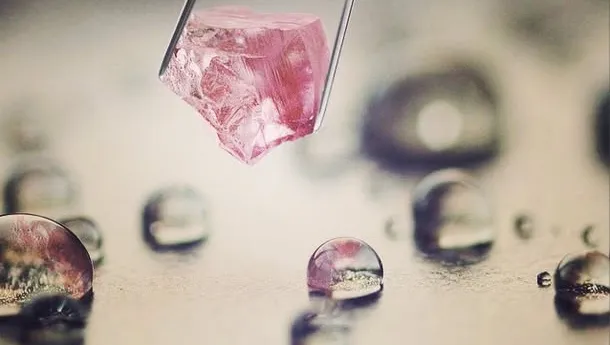
A small set of hand instruments answers most everyday questions at the counter or the bench: is it the stone it claims to be, is it treated, is it a diamond at all. Each instrument tests one property, and no single test is proof. Gemmologists use two or three instruments that agree with each other before they name a stone.
At a glance
| Instrument | What it tells you | Check before you buy |
|---|---|---|
| 10× loupe | Inclusions, surface features, clarity | Triplet lens: no colour fringes, sharp to the edge |
| Tweezers | Holds the stone steady | Tips that suit your stone sizes; a lock |
| Microscope | Inclusions in detail: natural, synthetic or treated | Stereo, at least 40×, with lighting from below and above |
| Refractometer | Refractive index, birefringence, optic sign | Reads to about 1.81; yellow (589 nm) light; contact liquid included |
| Polariscope | Singly or doubly refractive, or an aggregate | Folding models travel well; an optic-figure sphere is useful |
| Dichroscope | Pleochroism: two colours in one stone | Calcite or polarising type |
| Spectroscope | Absorption lines, for example from chromium or iron | Prism or diffraction; a scale helps beginners |
| Chelsea filter | Whether the colour comes from chromium | Cheap; use with a strong white light |
| UV lamp | Fluorescence under longwave and shortwave UV | Both wavelengths, in a dark viewing box |
| Carat scale | Weight, and specific gravity with a water pan | Approved for trade where you sell by weight |
| Diamond tester | Diamond or simulant | Thermal only, or thermal plus electrical for moissanite |
The loupe
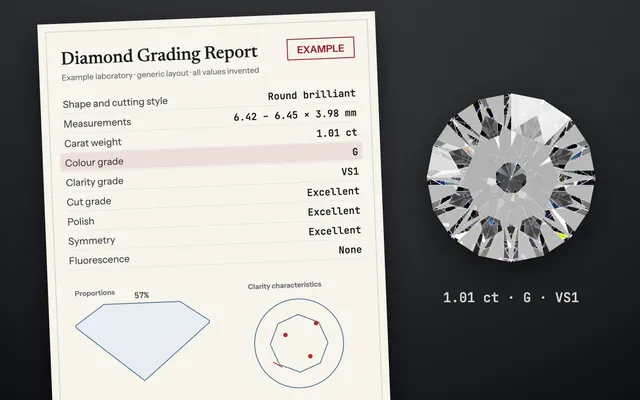
Clarity in diamonds is graded under 10× magnification, so a 10× loupe is the first tool of the trade. Buy a triplet: three lenses cemented together, corrected so the image has no colour fringes (achromatic) and stays sharp to the edge of the field (aplanatic). Look through it at printed text before you buy: the letters at the edge should be as crisp as those in the middle. A wider lens shows more of the stone at once. See how clarity characteristics look at 10× in our diamond clarity map.
Tweezers and a stone holder
Fine points pick up melee; broader tips hold larger stones without slipping. A sliding lock keeps the stone in place while you turn it under the loupe or the microscope. Tweezers with soft or grooved tips are kinder to small stones.
The microscope
Inclusions are often the only reliable way to separate a natural stone from a synthetic, and they show treatments too. A gem microscope is a stereo microscope with at least 40× magnification and lighting from below (darkfield) and from above. More magnification helps, but the operator's eye matters more than the optics: a modest microscope used often beats an expensive one used rarely.
The refractometer
The refractometer measures how strongly a stone bends light (its refractive index, RI), and for doubly refractive stones the birefringence and optic sign. It is the single most useful instrument for identifying transparent gems. Two things to know before buying:
- The scale stops at about 1.81. The contact liquid that joins stone and glass has an RI of about 1.81, so stones above it, such as diamond, zircon and demantoid garnet, read off the scale. GIA's student refractometer is rated for stones up to RI 1.81.
- Use yellow light at 589 nm. Published RIs are measured in this light; white light gives a blurred edge. Most current instruments have a built-in yellow LED or come with a filter.
The contact liquid is a hazardous chemical. Read its safety sheet, keep it closed and in the dark, wipe stones clean straight away, and do not use it on porous stones or organic gems such as pearl and amber. Gem-A advises buying a refractometer with a full reference set of RIs, so unusual stones are not missed. Our gemstone reference table lists RI and specific gravity for the common gems.
Polariscope and dichroscope
The polariscope shows in seconds whether a transparent stone is singly refractive, doubly refractive or an aggregate, and reveals strain and twinning. Many gemmologists use it first because it rules out many possibilities at once. Folding models travel well; a strain-free glass sphere lets you see the optic figure.
The dichroscope shows pleochroism: some doubly refractive stones show two different colours when viewed in different directions, which helps separate, for example, a ruby from a red garnet. Calcite dichroscopes and polarising-film dichroscopes both work; GIA's student kit uses calcite.
Spectroscope and Chelsea filter
The spectroscope shows dark absorption lines in the light that passes through a stone, and some elements leave a recognisable pattern. Prism and diffraction-grating spectroscopes both work. Inexpensive diffraction models are darker and harder to use; a built-in scale helps beginners; and whatever you buy, use reference drawings made for that type. A strong incandescent torch and a steady stand make a large difference.
The Chelsea filter is a quick check for chromium: stones coloured by chromium, such as most emeralds and rubies, look pink or red through it. It is not conclusive. Emeralds coloured by vanadium do not react, and a spectroscope answers the same question in more detail.
UV lamp
Many stones glow (fluoresce) under ultraviolet light, and the colour and strength help with identification and with reporting diamonds. Buy a lamp with both longwave (365 nm) and shortwave (254 nm) tubes, used inside a dark viewing box. Shortwave UV can damage the eyes: never look into the lamp, and protect eyes and skin when you work with it. See what each fluorescence grade means in our diamond fluorescence guide.
Carat scale
Gems are weighed in metric carats: one carat is exactly 200 mg, fixed internationally in 1907. Check how finely the scale reads (0.01 ct or 0.001 ct) and its capacity, and whether a water pan is available for specific gravity. If you sell stones by weight, the scale usually has to be approved for trade use: most countries follow the OIML R 76 framework for non-automatic weighing instruments, and the metric carat is an accepted unit for precious stones. Ask your national weights and measures office which class applies.
Diamond testers
A thermal tester separates diamond from most simulants because diamond carries heat away very fast. Synthetic moissanite also conducts heat well and reads as diamond on a thermal tester alone, so a multi-tester adds an electrical test: moissanite conducts electricity, diamond usually does not (rare blue type IIb diamonds are the exception).
Neither test tells natural from laboratory-grown diamond: both are diamond. That needs a diamond verification instrument. Before you buy one, check its independent results in the ASSURE programme of the Natural Diamond Council, which tests instruments against the same set of natural, laboratory-grown and simulant stones, and look for a low false-positive rate. See also our guide to how lab-grown diamonds are made and detected.
What to buy first
Gem-A's instruments team suggests starting with hand instruments and adding electronic ones as your work grows. A practical order:
- 10× triplet loupe and good tweezers
- Folding polariscope and a light source
- Spectroscope and Chelsea filter
- Refractometer with contact liquid
- Carat scale, then a UV lamp in a viewing box
- Diamond tester, and a verification instrument if you buy diamonds in volume
- Microscope, when you are ready to study inclusions seriously
Second-hand instruments can be good value. Check a refractometer with a stone of known RI, and make sure its glass (the hemicylinder) is not scratched; check that a loupe has no chips and no colour fringes.
Where the trade buys them
Gem institutes' instrument shops. Some gemmological institutes sell instruments, including student kits, through their own shops: GIA's online store and Gem-A Instruments in London are two. A gemmology course's list of the instruments it uses also makes a good shopping list; see the gemmology schools in our directory.
Trade fairs. You can try instruments and tools before you buy at the trade fairs in our fairs and events calendar. Some have areas for tools and machinery: T.GOLD, the machinery and technology show held with Vicenzaoro in January; the Tools & Equipment and Packaging zone of the Hong Kong International Jewellery Show; and the MJSA Showcase pavilion of bench tools and equipment at JA New York Spring. Check each fair's floor plan for the current year.
Jewellery districts. Tool and findings suppliers are usually close to where jewellery is made; our jewellery districts directory shows where those places are.
Facts last checked: 18 October 2026. Instrument ranges and fair floor plans change: check with the maker or organiser before you rely on them.
Share this article
Sources
- GIA: Diamond clarity, graded under 10× magnification
- GIA: Gem Identification lab class (instruments used, refractometer limits)
- GIA Store: instruments, including the gem identification student package
- GIA: Gems & Gemology, Winter 2024, analytical techniques overview
- Gem-A: What should be in the ideal gemmologist's toolkit? (June 2019)
- Gem-A Instruments: official online shop
- International Gem Society: Essential tools for gemology (Donald Clark, 2022)
- International Gem Society: Ultraviolet testing
- Cargille: gem refractometer liquid, nD 1.81 at 589.3 nm
- IEC Electropedia (after NIST): the metric carat, 200 mg since 1907
- UK legislation: Non-automatic Weighing Instruments Regulations 1995, schedule 2 (metric carat for precious stones)
- OIML: R 76, non-automatic weighing instruments
- Natural Diamond Council: ASSURE testing of diamond verification instruments
- Vicenzaoro: T.GOLD, machinery and technology for the goldsmith industry
- MJSA: MJSA Showcase at JA New York
- JETRO J-messe: Hong Kong International Jewellery Show, exhibit zones