CAD and 3D printing: from first file to finished casting
How digital design and 3D printing fit into making jewellery today, what the software and printers do, and how to work with a caster from your first file.
Most fine jewellery today starts life on a screen. Computer-aided design (CAD) lets you build a piece to the exact millimetre, show the client a realistic image before anything is made, and send the file to a workshop anywhere in the world. You don't need to own a printer to work this way, but you do need to understand the steps.
From idea to metal
- Design the piece in CAD, built around the real measurements of the stones and the finger, neck or wrist size.
- Render it: a photo-like image for the client to approve.
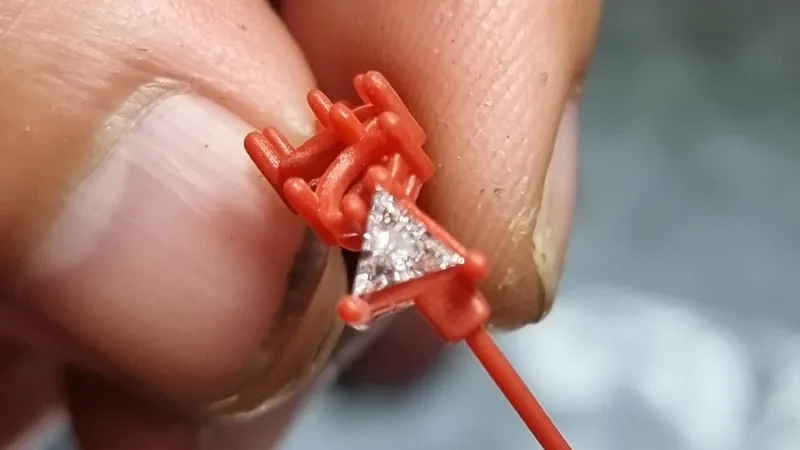
- Print a model, usually in castable resin or wax.
- Cast it in metal (lost-wax casting), or use the print as a master for a rubber mould when you need many pieces.
- Finish and set: clean-up, polishing, stone setting, plating.
The software
Jewellery CAD falls into two families. Precise, measurement-driven modelling, often in Rhinoceros 3D with jewellery plug-ins such as MatrixGold, suits rings, settings and anything with calibrated stones. Digital sculpting, for example in ZBrush, suits organic and figurative pieces. Free tools such as Blender are a low-cost way to learn. Many designers hire a CAD freelancer for their first collection and learn alongside.
Files and printers
- STL is the usual file for printing; keep the original CAD file too, so changes are easy.
- Resin printers (SLA and DLP) print fine detail in castable resins; wax printers print in a wax-like material that burns out cleanly.
- Direct metal printing exists, but it is mainly used by larger manufacturers.
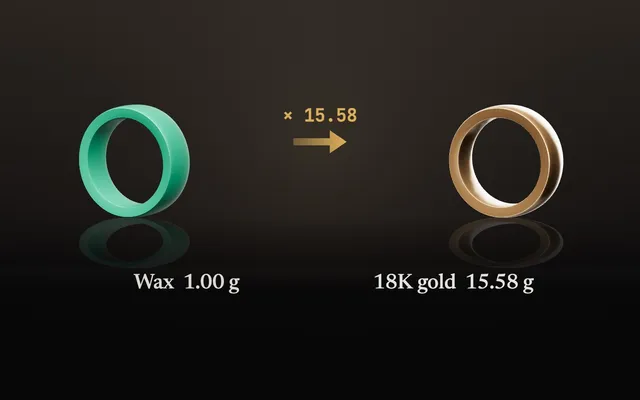
Castable resin is denser than wax, so the metal weight per gram of model is different. Our casting weight calculator handles both.
Working with your caster
- Ask which file format, printer and resin they use before you design.
- Ask their minimum thickness for walls, prongs and shanks: parts that are too thin don't fill in casting or break later.
- Design with real stone measurements, not nominal sizes; see our mm to carat chart.
- Allow for metal lost in finishing, and agree how it is charged.
- Approve a printed or cast sample before production.
Share this article
Sources
- Formlabs: Castable Wax resin (material and burnout)
- Formlabs: Density of selected Formlabs SLA resins
- Rhinoceros 3D (McNeel)
- MatrixGold (Gemvision)
Facts last checked on 11 October 2026.