Bangkok and Chanthaburi: sourcing coloured stones
How Thailand's two great gem centres work, what to expect on a first buying trip, and the habits that keep a new buyer safe.
Thailand has been one of the world's main centres for cutting, treating and trading coloured stones for decades. Rough and cut material arrives from Africa, Sri Lanka, Myanmar, Madagascar and beyond, and leaves again for manufacturers and dealers worldwide. For a buyer, two places matter most: Bangkok and Chanthaburi.
Bangkok: offices, labs and fairs
Bangkok's gem trade is concentrated around Silom, Surawong and Mahesak Road, with dealers' offices, cutting companies, jewellery manufacturers and suppliers of findings and tools close together. Business here is done by appointment, in offices, with memo and invoice.
Bangkok is also home to gem laboratories, including the Gem and Jewelry Institute of Thailand (GIT) and branches of several international laboratories (addresses in our laboratory directory). Having an important stone tested before you pay is normal practice, and good dealers expect it.
Twice a year the Bangkok Gems & Jewelry Fair brings the trade together under one roof. Dates are in our fair calendar.
Chanthaburi: the market town
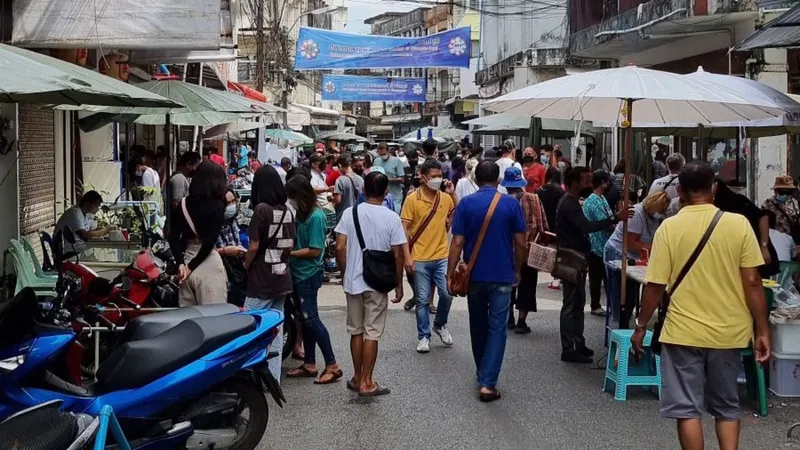
Chanthaburi, three to four hours' drive east of Bangkok, grew up around local ruby and sapphire mines. Today it is mainly a trading and treatment centre. Its gem market, around Si Chan Road, runs from Friday to Sunday, busiest on Saturday: dealers sit at tables, and brokers bring parcels for buyers to look at. It is fast, busy and full of material, much of it rough and calibrated stones in quantity.
Days and hours change. Check before you travel, and go early.
Habits that keep you safe
- Know the treatment and ask in writing. Most corundum on the market is heated; some is filled or diffused. Ask, and have it written on the invoice. See our guide to treatments and disclosure.
- Bring your own tools: loupe, tweezers, a daylight torch, a portable scale and calipers. Our carat weight estimator helps you check that a mounted stone's stated weight is plausible.
- Test before you pay for anything important, at a lab you choose.
- Start small with a new supplier and build up.
- Ignore street offers. Bangkok has a long-running scam aimed at tourists: friendly strangers, tuk-tuk drivers or "government" sales that end at a shop selling cheap stones as an investment for resale abroad. Real trade happens in offices, at fairs and through introductions.
- Paperwork. Keep invoices for export and for customs at home, and check your own country's import rules before you buy.
Share this article
Sources
- GIA: The Chanthaburi gem market
- Gem and Jewelry Institute of Thailand (GIT)
- Bangkok Gems & Jewelry Fair
- Government of Canada: Thailand travel advice (gems and jewellery purchases)
Facts last checked on 11 October 2026.